
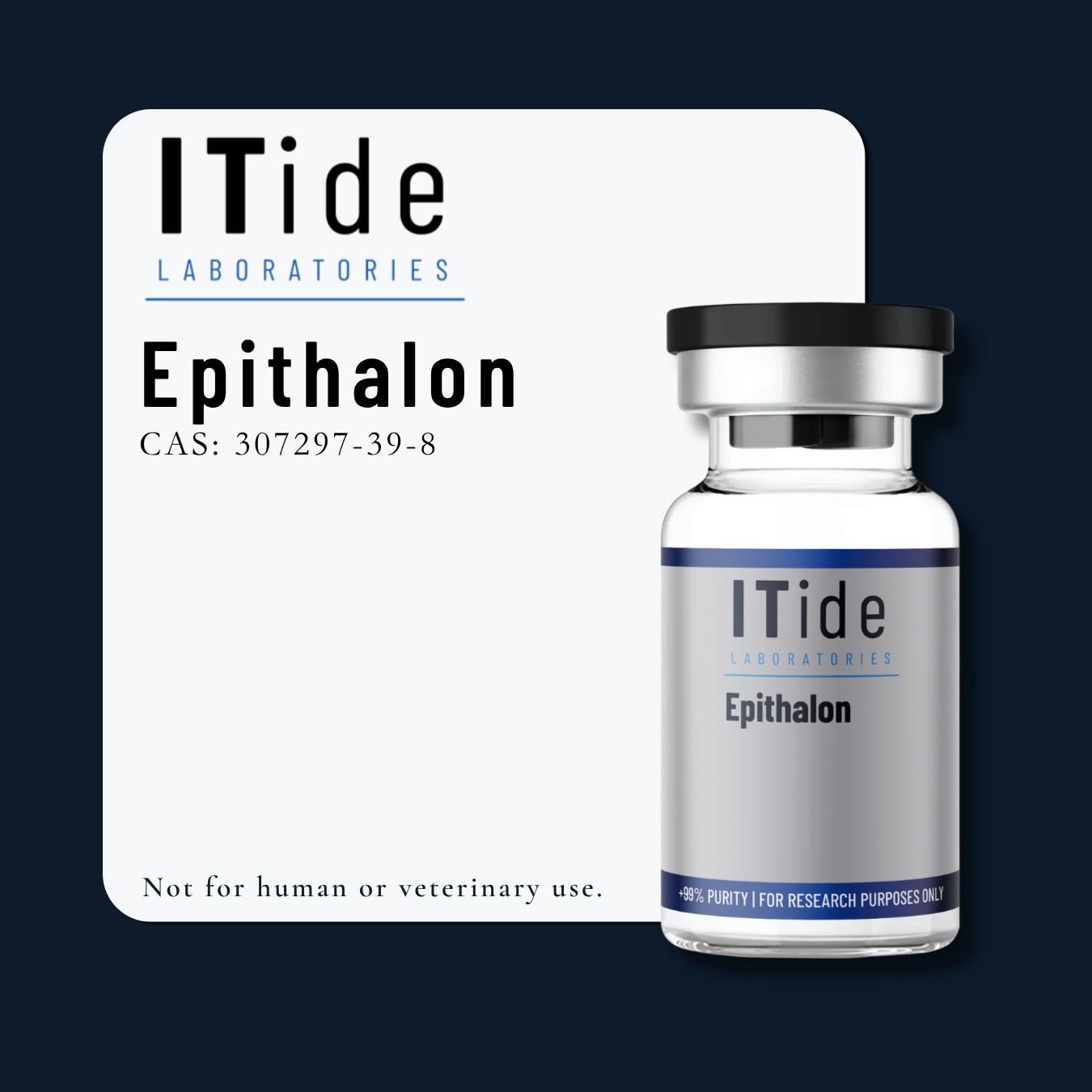
Epithalon 50mg
Epithalon is a synthetic tetrapeptide assigned CAS number 307297-39-8, with the four-residue sequence Ala-Glu-Asp-Gly (AEDG). It is a synthetic analog of epithalamin, a peptide fraction originally isolated from the pineal gland in research animals. As one of the shortest synthetic regulatory peptides characterized in the chemical literature, Epithalon serves as a useful reference compound in solid-phase peptide synthesis methodology and short-peptide pharmacology research. Epithalon was developed in the early 1990s by Vladimir Khavinson and colleagues at the St. Petersburg Institute of Bioregulation and Gerontology, as part of a structure-activity research program on short pineal-derived peptides. It is part of the broader Russian-developed regulatory peptide line that also includes Selank and Semax, which share the use of short, prolyl- or glutamyl-stabilized sequences. Epithalon has since been described in the peer-reviewed literature as a model substrate in telomerase-activity assay research and as a reference compound for short-peptide synthesis methodology. Full analytical specifications - including molecular formula, molecular weight, and HPLC-UV purity - will be published on this page following independent third-party Certificate of Analysis verification. Current status: COA testing in progress. ITide Labs supplies Epithalon as a reference compound for laboratory research conducted by qualified professionals only.
$135.00
Epithalon is a synthetic tetrapeptide assigned CAS number 307297-39-8, with the four-residue sequence Ala-Glu-Asp-Gly (AEDG).
Need a larger quantity? Contact us for custom bulk pricing.
Volume Discounts
Researcher Account Required
Create a free researcher account to place orders.
ITide+ Laboratories sells exclusively to verified researchers. All products are Research Use Only (RUO) — for laboratory research use only, diagnostic use, or therapeutic application.
By creating an account you confirm you are a qualified researcher and will use these compounds in accordance with all applicable laws and regulations.
For laboratory research purposes only by qualified professionals. This product has not been evaluated by the FDA for clinical application.
- ✓ Lyophilized powder, research grade
- ✓ For laboratory research use by qualified professionals
COA Coming Soon
Third-party lab analysis for this lot is in progress. The Certificate of Analysis will be published upon completion.
Epithalon is a synthetic tetrapeptide assigned CAS number 307297-39-8, with the four-residue sequence Ala-Glu-Asp-Gly (AEDG). It is a synthetic analog of epithalamin, a peptide fraction originally isolated from the pineal gland in research animals. As one of the shortest synthetic regulatory peptides characterized in the chemical literature, Epithalon serves as a useful reference compound in solid-phase peptide synthesis methodology and short-peptide pharmacology research.
Epithalon was developed in the early 1990s by Vladimir Khavinson and colleagues at the St. Petersburg Institute of Bioregulation and Gerontology, as part of a structure-activity research program on short pineal-derived peptides. It is part of the broader Russian-developed regulatory peptide line that also includes Selank and Semax, which share the use of short, prolyl- or glutamyl-stabilized sequences. Epithalon has since been described in the peer-reviewed literature as a model substrate in telomerase-activity assay research and as a reference compound for short-peptide synthesis methodology.
Full analytical specifications - including molecular formula, molecular weight, and HPLC-UV purity - will be published on this page following independent third-party Certificate of Analysis verification. Current status: COA testing in progress.
ITide Labs supplies Epithalon as a reference compound for laboratory research conducted by qualified professionals only.
For laboratory research purposes only by qualified professionals. This product has not been evaluated by the FDA for clinical application.
For laboratory research purposes only by qualified professionals. This product has not been evaluated by the FDA for clinical application.